
When you first step into the world of Pokémon TCG collecting, you’ll quickly hear people talking about “slabs.” But what exactly are they, and why do collectors and investors pay such close attention to them? In this guide, we’ll break down what slabs are, why they matter, and how you can get started with them.
⸻
What Are Pokémon Slabs?
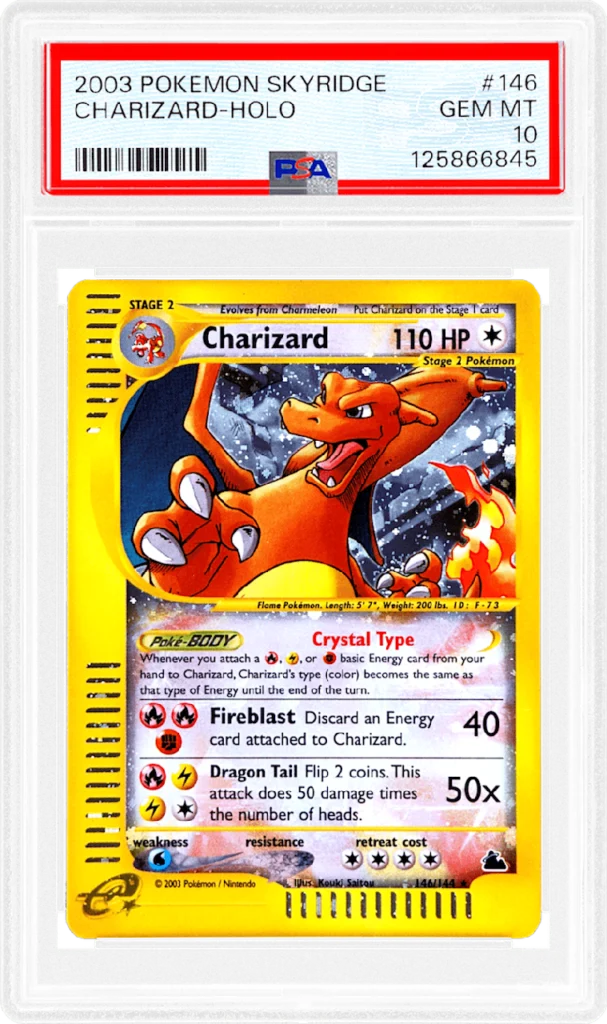
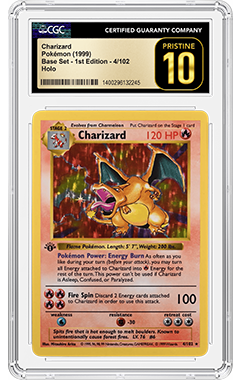
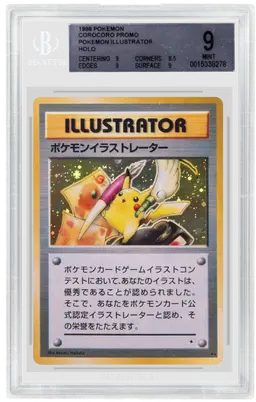
A “slab” is the nickname collectors use for a Pokémon card that has been graded and sealed inside a hard plastic case by a professional grading company. The most well-known companies are PSA (Professional Sports Authenticator), BGS (Beckett Grading Services), and CGC (Certified Guaranty Company).
Each slab includes:
•The card itself (sealed permanently inside).
•A grading label that shows the company, grade (usually 1–10), and unique certification number.
•Tamper-proof plastic protection.
They’re called “slabs” simply because the cases are thick, solid, and durable compared to a card sleeve or top loader.
⸻
Why Do People Grade Pokémon Cards?
Grading a card adds credibility and protection, and often increases its value. Here’s why people send their cards in to be slabbed:
•Authentication → Confirms the card is genuine and not a fake.
•Condition-based value → A PSA 10 (Gem Mint) can sell for many times more than the same card in raw, ungraded form.
•Protection → The hard case protects against scratches, bending, and other damage.
•Market trust → Slabs are easier to sell and often fetch higher prices since buyers know exactly what they’re getting.
For example, a raw Umbreon VMAX Alternate Art might sell for a few hundred dollars, but the same card graded PSA 10 could sell for over double, sometimes even more depending on market demand.
⸻
How the Grading Process Works
The grading process is fairly straightforward, though it can be expensive and time-consuming:
1.Submission → You prepare and send your card to a grading company.
2.Evaluation → Experts review centering, corners, edges, and surface under magnification.
3.Grade Assigned → Typically on a scale of 1 to 10, with 10 being Gem Mint.
4.Encapsulation → Card is sealed in the tamper-proof case with the grade displayed.
Each company has slight differences. For example:
•PSA → Most widely recognized and respected.
•BGS → Known for subgrades (centering, edges, corners, surface).
•CGC → Popular for affordability and fast turnaround.
⸻
Are Slabs Good Investments?
Many collectors see slabs as a safer way to invest in Pokémon TCG compared to raw cards. Slabs reduce the risk of condition disputes and provide a clearer market value.
That said, there are downsides:
•Costs → Grading can cost $15–50+ per card, depending on company and speed.
•Turnaround time → Submissions can take weeks or even months.
•Scams/fakes → Counterfeit slabs do exist, so buying from trusted sources is essential.
For investors, slabs often act as a “store of value” in the hobby. While raw card values fluctuate more heavily, slabs, especially in PSA 9 or PSA 10, hold steadier prices.
⸻
How to Get Started With Slabs
If you’re new, here’s the smart way to begin exploring slabs:
•Buy, don’t grade first → Instead of sending in your own cards, start by buying affordable slabs to learn the market.
•Start small → Avoid dropping thousands on a PSA 10 Charizard right away. Look at modern hits, promo cards, or even PSA 8/9 slabs, which can be far more affordable.
•Use trusted marketplaces → eBay, PWCC, Goldin, and TCGPlayer are common platforms. Always buy from reputable sellers with good reviews.
•Research population reports → Check how many PSA 10 copies of a card exist. Lower population often means stronger long-term value.
⸻
Final Thoughts
Slabs are an essential part of the Pokémon TCG collecting and investing scene. They provide trust, protection, and stability in a market that’s often full of uncertainty.
If you’re just starting out, remember: slabs aren’t only for high-rollers. You can begin small, learn the grading system, and gradually work your way into higher-value cards.
👉 Next steps:
•Read our Beginner’s Guide to Pokémon TCG if you’re just getting into collecting.
•Check out our Top 5 Tips for Investing in Pokémon TCG to avoid common mistakes.
•Stay tuned for our upcoming Sealed Products Explained guide.